The Apennines run the length of the Italian peninsula — roughly 1,200 kilometres from the Ligurian Alps in the northwest to the Aspromonte massif in Calabria. Across this range, the foraging calendar shifts by latitude, altitude, and exposure. A plant that peaks in late February in Calabria may not appear until May in the Apennines of Emilia-Romagna. Understanding the regional variation is the starting point for any meaningful foraging in this mountain system.
What follows is a calendar framework based on the central Apennines — the stretch from the northern Tuscan-Emilian Apennines south through Umbria and the Marche. References to lower or higher altitude variants are given where the difference is significant. At each altitude band, timing can shift by two to three weeks depending on the year's winter rainfall and spring temperatures.
February–March: The Opening
The first foraging of the year in the central Apennines begins not in forest but on south-facing road verges and disturbed ground. Nettles (Urtica dioica) emerge first in sheltered spots at valley floors — often between 200 and 500 metres elevation — by mid-February in mild years, though reliable picking usually starts in early March. The young growth is densely nutritious: high in iron, calcium, and vitamins A and C.
Alongside nettles, the first wild chicory (Cichorium intybus) rosettes appear — compact, low to the ground, before the flowering stalk develops. This early growth is prized in Roman and Umbrian cooking as a bitter green for sautéing with garlic and olive oil. In the Spoleto valley and around Norcia, early chicory gathering is a fixed domestic rhythm.
Dandelion (Taraxacum officinale agg.) is also gathered in quantity at this time of year, primarily the leaves and — where the soil is light — the roots. Dandelion root, roasted and ground, has been used as a coffee substitute in the Apennines during periods of shortage and continues to appear in some traditional preparations.
April–May: Peak Spring Gathering

April is the most active month on the Apennine foraging calendar. Wild garlic (Allium ursinum) reaches its peak in moist, shaded ravines and stream-side woodland. In the Apennines, particularly notable concentrations occur in the valleys of the northern Marche and the Casentino forest in Tuscany. The Foreste Casentinesi National Park — one of the largest old-growth forests in Italy — hosts substantial wild garlic populations in its beech-dominated understorey.
Hops (Humulus lupulus) are gathered in April for their young shoots, known as bruscandoli in the Veneto and sparaci de luppolo in parts of the Marche. The shoots emerge from established root systems along hedgerows and stream banks and are cooked like asparagus — with butter, or in risotto and frittata.
Ground elder (Aegopodium podagraria) appears in dense, shaded patches near old buildings and in riparian woodland. Its triangular compound leaves are edible when young and have a mild, slightly anise-like flavour. It is less widely used in Italian cooking than in northern European traditions, but it is gathered locally in parts of the northern Apennines where the plant is common.
Note on altitude: The calendar items above apply to 400–800m elevation in the central Apennines. At 800–1,200m (the sub-montane zone), the same plants typically emerge 3–4 weeks later. Above 1,200m, spring greens may not be available until June.
June: The Transition
June marks the end of the main spring green season and the beginning of the flower and early fruit period. Elderflower (Sambucus nigra) reaches peak bloom in early to mid-June at most Apennine elevations. The flower heads are gathered for syrup (sciroppo di sambuco), for fritters in batter (fiori di sambuco fritti), and for infusions. The practice is widespread throughout the Apennines and well-documented in regional recipe collections from Emilia-Romagna, Umbria, and Abruzzo.
Wild strawberry (Fragaria vesca) ripens in June in sunny clearings and at forest margins. The fruit is smaller and more intensely flavoured than cultivated strawberry — gathered and eaten fresh or used in simple preserves. In parts of Tuscany and Umbria, wild strawberries are sold at local markets by weight through June and into July.
July–August: Summer and High Altitude
The lowland foraging lull of midsummer corresponds to the peak window for high-altitude gathering. Above 1,000 metres, the alpine meadows and subalpine shrublands of the Apennine crest offer species not found lower down. Bilberry (Vaccinium myrtillus) is the most gathered, particularly in the Gran Sasso and Majella massifs in Abruzzo, where harvest by local communities persists as a documented seasonal practice.
Chanterelles (Cantharellus cibarius) begin appearing in beech and mixed forest from mid-July in the northern Apennines, extending into September. The chanterelle season is closely tied to rainfall — dry spells delay or suppress fruiting — and experienced gatherers follow weather patterns and altitude in combination to time their outings.

September–October: The Mushroom Peak
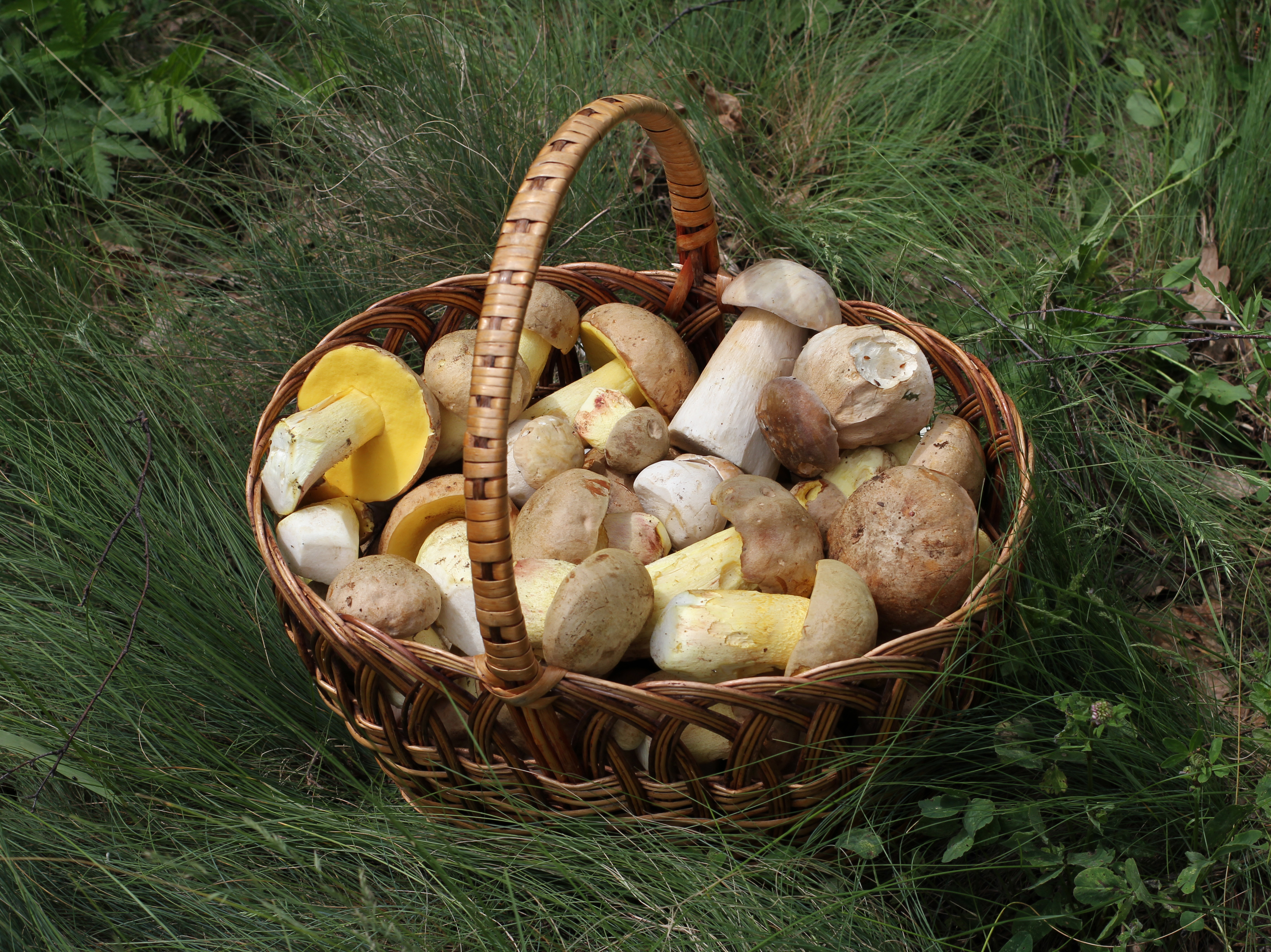
Autumn is mushroom season across the Apennines, and the period from mid-September through October represents the most intensive gathering period of the entire year. Porcini (Boletus edulis and related species) are the primary target, gathered from conifer and mixed woodland from the Apennine ridge down to about 700 metres. Municipalities across the Apennines restrict gathering through local permits, with daily quantity limits typically set at 3 kg per person.
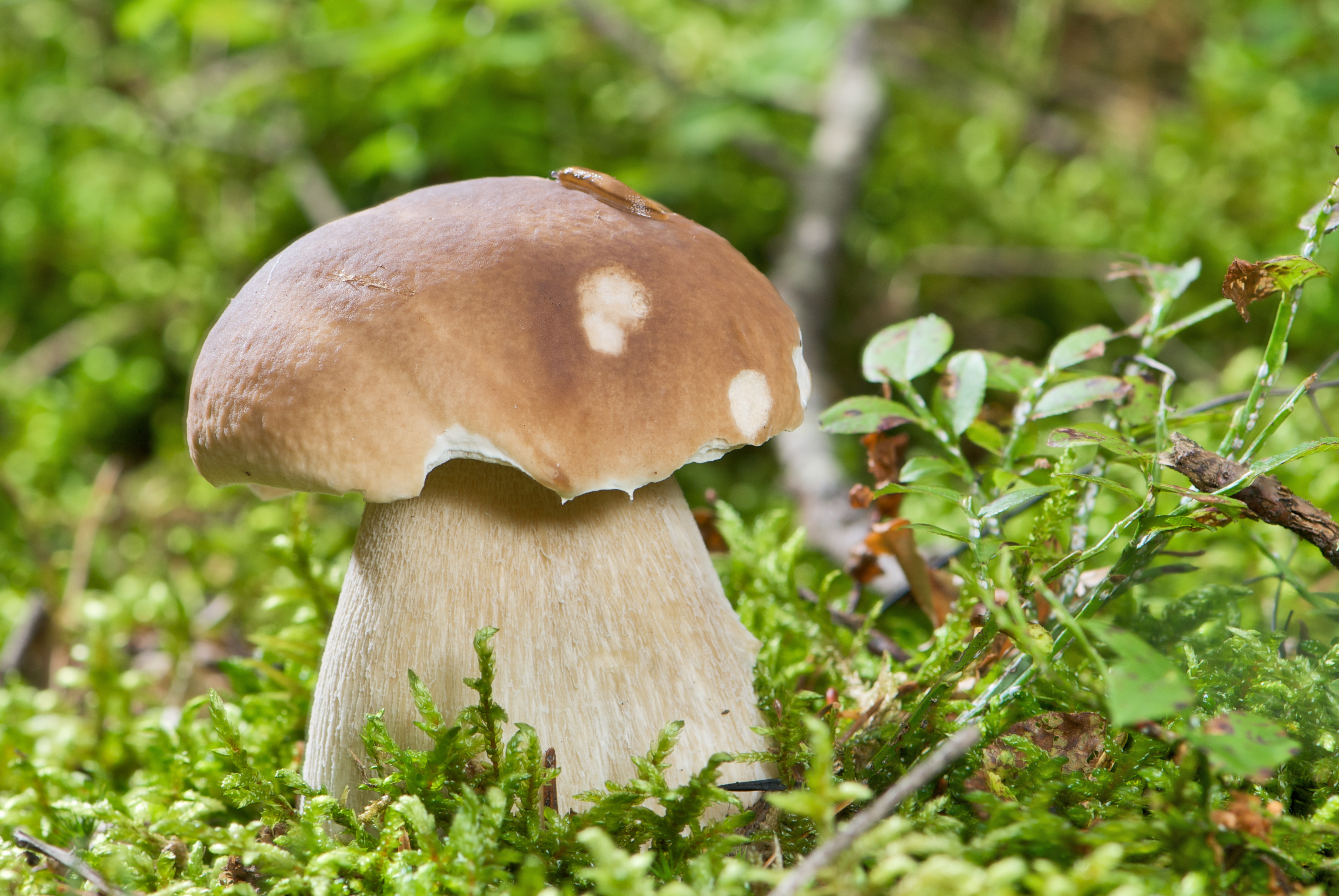
The Casentino, the Sibillini, and the forests around Norcia are among the most frequently referenced porcini areas in central Italy. The town of Norcia itself holds a porcini and truffle fair in October that draws regional and national attention, reflecting the depth of the local gathering economy.
Late chicory varieties return in September as temperatures drop. By October, the autumn dandelion flush appears — younger plants with leaves less bitter than in spring, valued in salads. Autumn-gathered rose hips (Rosa canina) are collected for syrup, tea, and jam — high in vitamin C and gathered from hedgerow and forest margin rose bushes throughout the Apennine corridor.
November–January: The Quiet Period
Gathering slows significantly through the winter months, but does not stop entirely. Truffle harvest — primarily black truffle (Tuber melanosporum) in Umbria and Abruzzo — runs from December through March and is conducted by licensed gatherers with trained dogs. This is not open access foraging; it is a regulated profession with certification requirements and defined territorial rights.
In lowland areas below 300 metres, mild winters allow some early nettles and chickweed to persist through December and January. Rosemary, bay, and various hedgerow greens remain available. For most Apennine foragers, however, winter is the time for preserving what autumn yielded — drying porcini, making rose hip syrup, putting up the last of the autumn gather in salt, oil, and vinegar.
Regional Regulatory Notes
Every Italian region has its own foraging regulations, and these are enforced with increasing seriousness across the Apennines as gathering pressure has grown. As a general rule: gathering in national parks requires a written permit from the park authority; gathering in regional nature reserves is subject to reserve-specific rules; gathering on private land requires the owner's permission; and commercial gathering (selling what you gather) requires registration as an agricultural producer or a specific regional licence.
Quantity limits for personal gathering outside protected areas typically range from 1 to 3 kg per species per person per day, with mushroom limits usually lower (1–2 kg) than for greens. The specific rules for each region can be found through the regional forestry authority (Corpo Forestale).
The Italian Ministry of the Environment maintains updated information on national park regulations, and the Società Botanica Italiana publishes species protection lists that foragers should be aware of before gathering any plant in quantity.